Two people can sit in the same carriage, on the same train, at the same time, and pay wildly different amounts for the journey. One booked weeks ago and paid a fraction of what the other handed over at the station that morning. Nothing about Britain's ticketing system makes that obvious, but the rules are learnable — and once you know them, the savings repeat every time you travel.
Four things do most of the heavy lifting: when you book, how you split the journey, whether you hold a railcard, and what time of day you travel. Get all four right and a £180 return can turn into a £40 one. Get them wrong and the same journey quietly costs four times what it needed to.
The good news is that none of this requires inside knowledge. It requires a little patience, a couple of websites open in different tabs, and the willingness to compare fares rather than accept the first price you're shown.
Advance tickets: the booking window is your best friend
Advance fares are the cheapest tickets on most long-distance routes, and they behave like airline seats. A fixed number are sold at each price band, the cheapest sell first, and once they're gone the next band up appears. In exchange for the low price, you're tied to a specific train.
Operators generally release Advances up to about twelve weeks before travel, though the window varies by route. If you're planning further ahead than that and nothing is showing, it's usually because the timetable or the fares haven't been loaded yet, not because the train is full. Set a reminder and check again.
A few practical points:
- Book early for weekends, bank holidays and the days either side of them. These fill fastest, and the cheap bands can vanish weeks out.
- Two singles are often cheaper than a return on long-distance routes — check both before you commit.
- Booking on an operator's own site usually avoids the booking fee some third-party retailers add at checkout.
- Check the change rules. Some Advance fares can be amended for a fee plus any difference in fare, others are non-refundable, and a few can be exchanged for travel credit. If your plans might shift, that flexibility is worth paying a little more for.
- Compare the cost of an Advance against an off-peak flexible ticket. If the difference is a couple of pounds, buy the flexible one and stop worrying about missing your train.
How far ahead should you actually book?
There's no single magic number, but a rough pattern holds. For a popular weekend route, the cheapest Advances are usually gone within days of release. For a midweek trip on a quieter line, you can often still find reasonable fares a couple of weeks out. The fares rarely get cheaper as the date approaches — they only get scarcer — so if you see a price you're happy with, take it.
Split ticketing: same train, lower fare
Split ticketing means buying two or more tickets that cover one journey, instead of a single ticket from A to B. You stay on the same train. You don't get off, change seats or do anything unusual. The only condition is that the train calls at the station where one ticket ends and the next begins — it doesn't have to stop long, and you don't have to leave the carriage.
The reason it works is that fares are set point-to-point, not by distance. A through fare from a big city to a distant terminus can be priced higher than the sum of its parts, because each segment has its own competing operators, its own off-peak rules and its own quota of cheap Advance fares.
A classic example: a long cross-country run priced as one ticket may cost considerably more than buying a ticket to a midpoint and a second ticket from there to your destination. The same logic applies to shorter trips — a commuter journey that crosses a boundary between two pricing zones can sometimes be halved by buying two tickets that meet at the boundary station.
Rule of thumb: if a journey passes through a major interchange, it's worth pricing that interchange as a split point.
Things to know before you try it:
- Every ticket in the split must be valid for the train you're on. An Advance split only works on the specific train it was booked for, so all segments must match.
- If one leg is delayed and you miss a connection, compensation and rebooking rights can be messier than with a single through ticket. Keep your tickets together.
- Automated split-ticketing tools do the searching for you, but it's worth checking the results manually — occasionally the obvious split isn't the cheapest one.
Railcards: pay once, save all year
A railcard is the simplest saving in the system. You pay a modest annual fee and get roughly a third off most fares for a year. Most cost somewhere around £30–£35 for twelve months, with three-year versions working out cheaper per year, so the card usually pays for itself within one or two trips.
There's a railcard for most situations:
- 16-25 — for full-time students and young travellers, with a minimum fare on some weekday morning journeys.
- 26-30 — the same discount for people who missed the age cut-off.
- Senior — for travellers aged 60 and over.
- Two Together — for two named adults travelling together; the discount applies when both travel.
- Family & Friends — for one or two adults travelling with children, and it discounts the children too.
- Network — for journeys in the London and South East area, with a minimum fare on weekday mornings.
- Disabled Persons — plus a companion's discount on many journeys.
Check the small print. Some railcards carry a minimum fare before a certain time on weekdays, which can wipe out the discount on very cheap Advances. Digital versions are now standard and avoid the "I left it on the kitchen table" problem.
Time of day: off-peak, super off-peak and Anytime
Ticket types are really a menu of flexibility. Anytime tickets let you travel on almost any train and are priced accordingly. Off-peak tickets restrict you to quieter periods. Super off-peak restricts you further still and costs the least. The restrictions vary by operator, so always read the validity shown at the point of sale rather than assuming.
The practical rule: if you can travel after the morning peak and avoid the late-afternoon rush, you'll usually pay less. If you need to be somewhere at 9am on a Monday, you're buying flexibility whether you want it or not.
Group travel and small extras
If you're travelling as a group of three to nine adults, ask about group discounts, which are often available on off-peak services. Children usually travel at a reduced fare, and under-fives generally travel free. These aren't headline savings, but they stack.
A five-minute booking routine
- Search the journey on a split-ticketing site and on the operator's own site for your date.
- Compare the Advance price with the off-peak flexible price, and two singles against a return.
- Check whether a railcard you already hold — or one you'd buy — applies to the fare you're looking at.
- Look at the fare for travelling an hour earlier or later. Off-peak boundaries can change the price dramatically.
- Book direct where the fee is lowest, and save the confirmation somewhere you'll find it on the day.
None of this is glamorous, and it takes a few minutes. But the gap between the traveller who paid £40 and the one who paid £180 wasn't luck. It was a booking window, a split point, a railcard and a train that left at 10:15 instead of 8:45. Same carriage, same arrival — very different receipt.
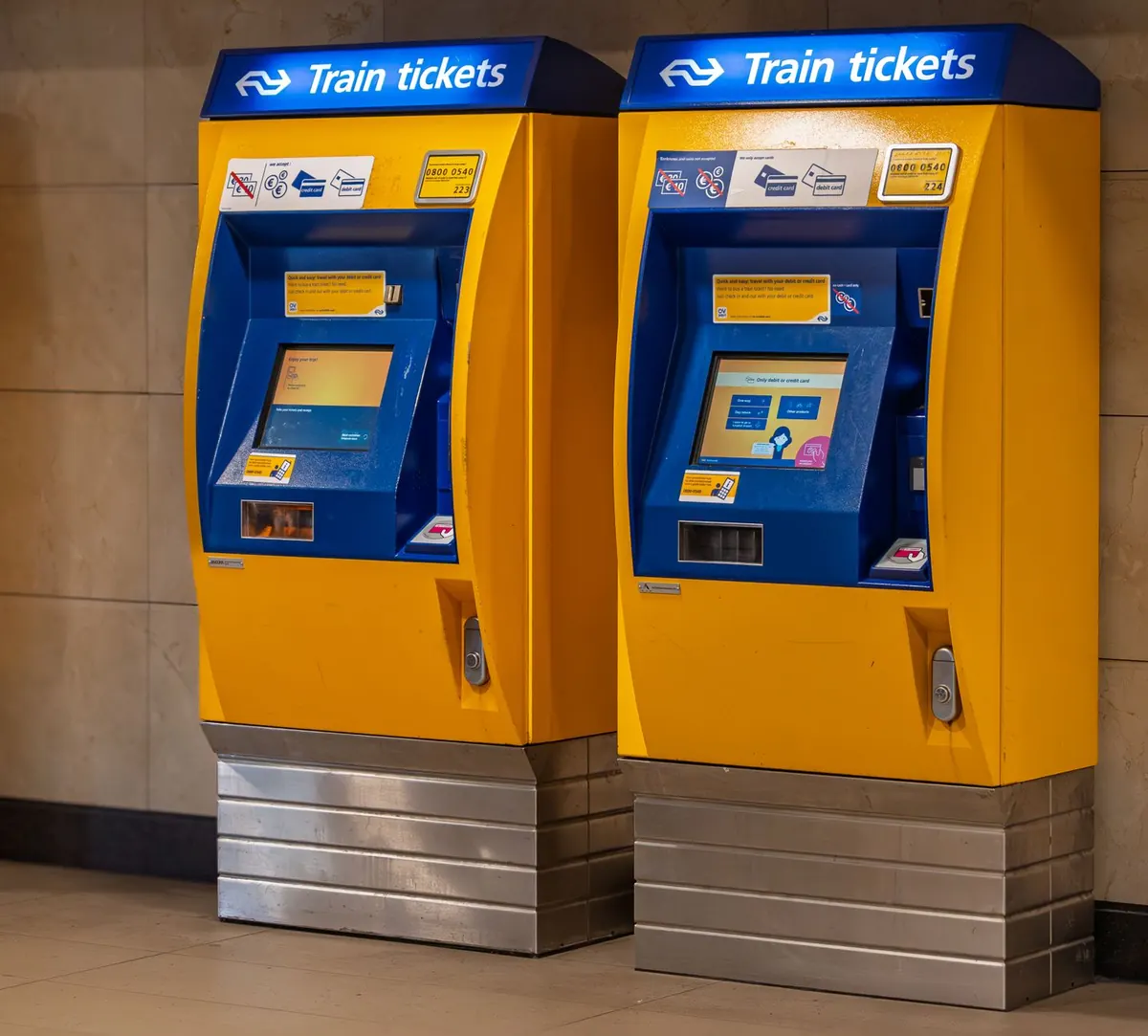
Photo: Martijn Stoof / Pexels