Autumn is a fine season for a city break. The crowds thin, the light softens, and you can walk for hours without overheating. The catch is the weather: a bright morning can turn into a damp afternoon, and evenings arrive cool enough for a proper coat. Packing for ten days in one cabin bag is entirely possible, provided you stop thinking about outfits and start thinking about layers. The aim is a small kit that mixes easily, washes through, and leaves room for a few souvenirs.
Start with the bag, not the clothes
Before you fold a single shirt, check your airline’s cabin allowance. Many carriers permit one bag around 55 x 40 x 20 cm plus a personal item, but the details vary. Weigh your empty bag, then weigh it again when packed. If you are close to the limit, wear your heaviest shoes and coat on travel day.
Use packing cubes or compression bags to keep categories together. They also make it obvious when something is missing. Put chargers, medication and documents in your personal item, not in the overhead locker. A small shoulder bag or backpack that fits under the seat is more useful than a second wheeled case.
The ten-day capsule wardrobe
For ten days, aim for roughly a week’s worth of clothing and plan one laundry session. Choose a tight colour palette — navy, grey, cream, camel, black — so everything works together. Here is a workable baseline for a cool-weather city break.
- Tops: four or five long-sleeved tops, plus one short-sleeved layer for mild afternoons.
- Mid-layers: two jumpers or cardigans, one fine knit and one warmer.
- Outer layer: one waterproof, windproof jacket that packs small.
- Trousers: two pairs — one dark, one neutral — plus a skirt or dress if you enjoy wearing them.
- Underwear and socks: seven to eight pairs of each, including one warm pair for cold days.
- Sleepwear: one set of lightweight pyjamas or a T-shirt and shorts.
- Shoes: one comfy walking pair and one smarter pair, both broken in.
- Accessories: a scarf, thin gloves, a hat, a belt and a compact umbrella.
That list looks modest on the bed. Worn in rotation, with a mid-trip wash, it covers ten days comfortably. If you run cold, add a thermal base layer rather than another jumper.
Choose fabrics that behave
Merino wool, fine knits and technical blends resist odour and dry quickly. Cotton is comfortable but slow to dry and chilly when damp. Denim is heavy and takes ages to dry, so treat jeans as a travel-day item rather than a laundry candidate. A silk or merino base layer adds warmth without bulk.
Layer for autumn weather
The three-layer system is still the most reliable approach. Start with a base layer that sits close to the skin. Add a mid-layer for insulation. Finish with a shell that blocks wind and rain. You can remove or add a layer as the day warms up, which matters when you are moving between streets, museums and cafés.
Pack a scarf even if the forecast looks mild. It doubles as a blanket on a cold train, a pillow on a long coach ride, and a quick cover-up if you visit a religious site. Thin leather gloves take up almost no space. A compact umbrella is useful, but a hooded waterproof jacket is better in strong wind.
Toiletries that pass security
Liquids and gels must usually fit in a clear bag of no more than one litre, with each container holding 100 ml or less. Decant your usual products into small, leakproof bottles. Label them if the contents are not obvious. Put the liquids bag at the top of your cabin bag so you can pull it out at security without unpacking everything.
Solid shampoo bars, conditioner bars and deodorant sticks save space and rarely leak. Sunscreen may still be worth carrying in autumn if you burn easily, but a small tube is enough. Hotels often provide hairdryers, so leave yours at home unless you rely on a specific model.
If you take prescription medication, keep it in its original packaging with a copy of your prescription. Check the rules for your destination and airline before you travel, and seek professional advice if you are unsure about carrying controlled medicines.
Smart extras worth the space
These small items solve problems that can otherwise spoil a day. Choose them carefully; every extra should have at least two uses.
- A foldable tote for groceries, laundry or an extra layer.
- A power bank and a short charging cable, kept in your personal item.
- A universal travel adaptor if you are crossing borders.
- A reusable water bottle, empty through security and filled afterwards.
- Blister plasters, painkillers and any personal first-aid items.
- Laundry sheets or a small bottle of travel wash.
- A stain remover wipe and a few safety pins.
- Earplugs and an eye mask for noisy hotels or overnight travel.
If you cannot carry it comfortably for twenty minutes, it probably does not belong in a cabin bag.
A simple packing order
- Lay everything out and remove one top, one pair of shoes and one “just in case” item.
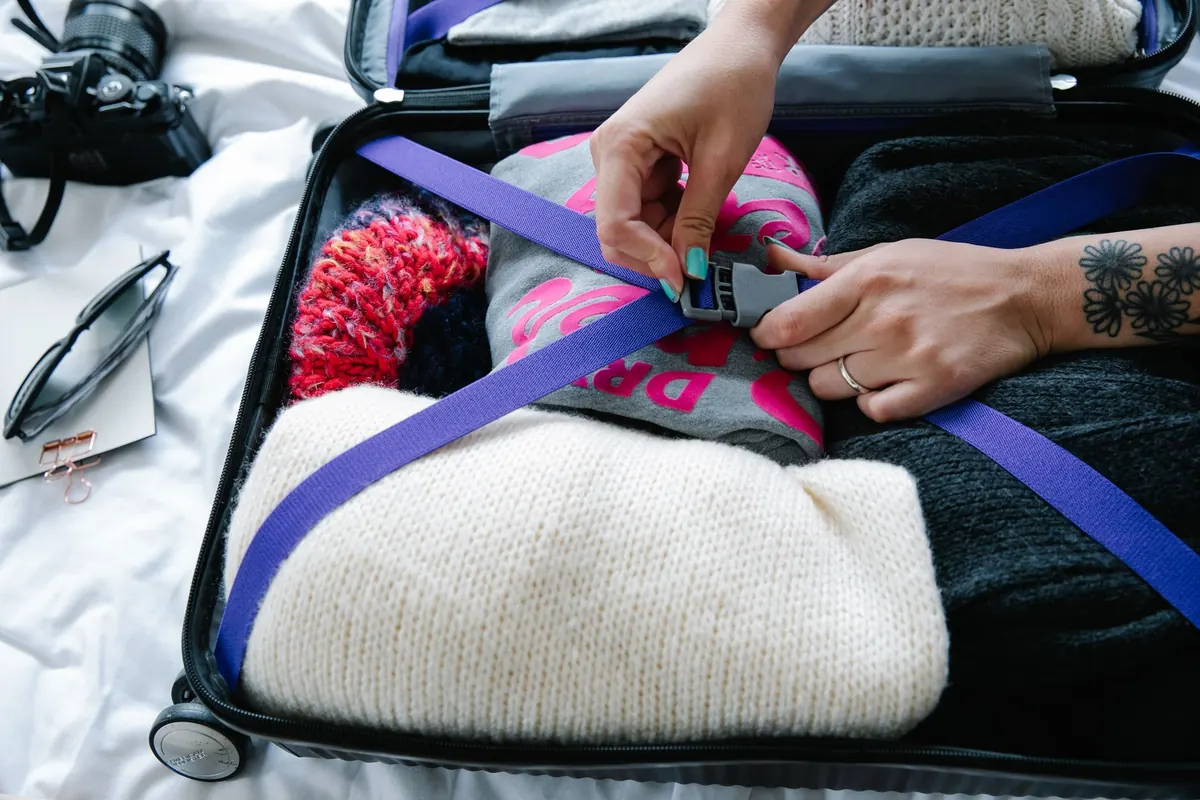
- Roll soft clothing and place it in packing cubes by category.
- Put shoes at the bottom, soles facing out, and fill the gaps with socks.
- Place the liquids bag and documents where you can reach them easily.
- Wear your heaviest jacket, shoes and jumper on travel day.
- Leave a little space for souvenirs or laundry.
Plan one laundry session around day five or six. A sink wash with travel detergent works for socks, underwear and thin tops. Roll them in a towel to remove excess water, then hang them overnight. Heavier items can wait until you are home.
Last checks before you zip up
Check the weather forecast a day or two before you leave, but do not rebuild your entire bag around it. Autumn forecasts change quickly. Confirm your airline’s cabin rules, especially if you are flying with a budget carrier. Keep passports, boarding passes, medication and a pen in your personal item. Charge your phone and power bank the night before.
Finally, test the bag. Walk around the block with it fully packed. If it digs into your shoulder or you cannot lift it into an overhead rack, adjust now rather than at the airport. A well-chosen capsule wardrobe should feel light, flexible and quietly capable — exactly what you want when the first cold morning arrives and you are ready to explore.
Photo: Timur Weber / Pexels