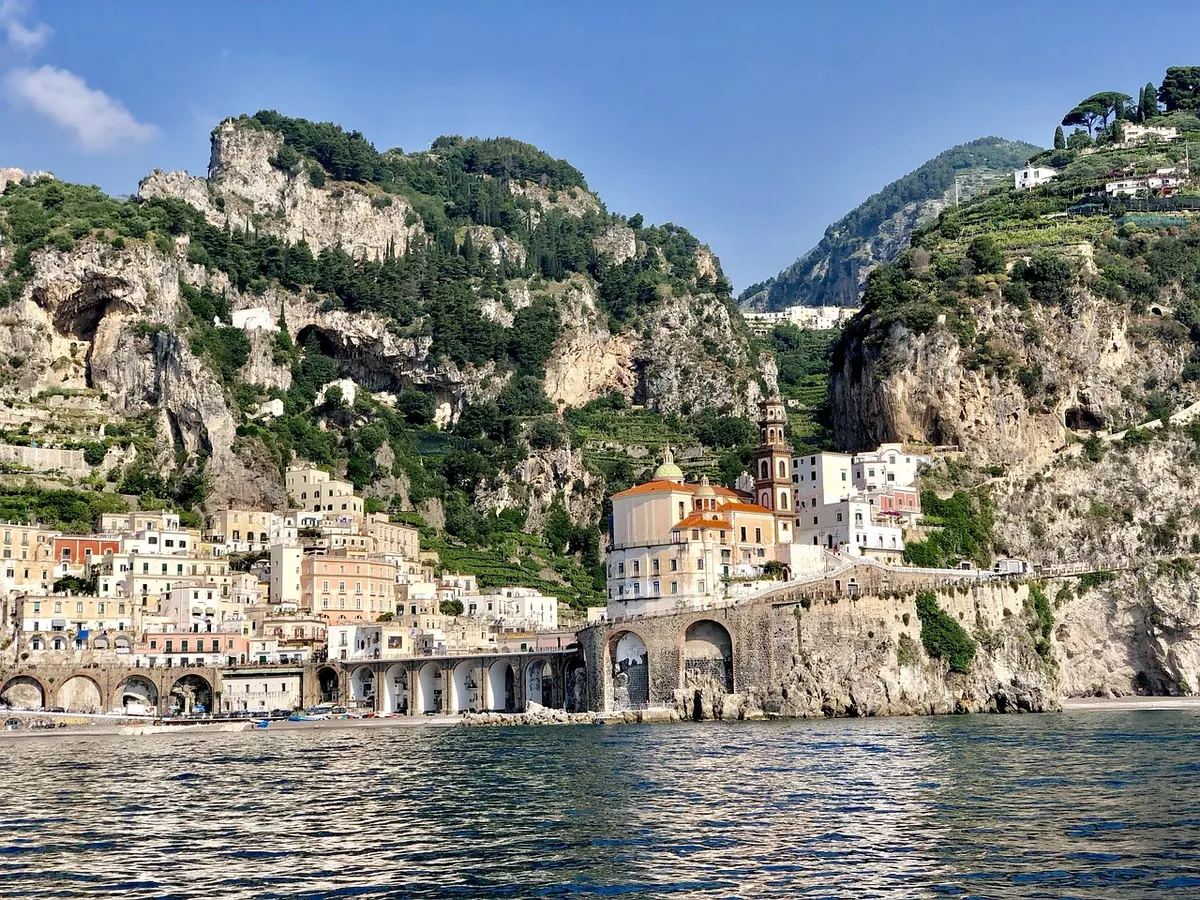
You can see most of the Amalfi Coast from the deck of a boat, and the rest from a bus that leans into the bends. Renting a car here means paying to park it, then sitting in the same traffic you came to escape. This seven-day route skips all of that: two nights in Sorrento, then Positano, Amalfi and Ravello, with a spare day for a boat trip or a walk. It works best from roughly Easter to late October, when the ferries run. Outside those months you can still do it, but buses and trains do the heavy lifting.
How the car-free route fits together
Three bases, three modes of transport. Ferries are the fast, scenic spine: Sorrento to Positano to Amalfi, with Salerno at the southern end and Capri an easy hop from Sorrento or Positano. Buses fill the gaps — the SITA coast service up and down the Amalfi road, and a separate shuttle from Amalfi up to Ravello. Trains only matter at the edges: the Circumvesuviana line links Naples, Pompeii, Herculaneum and Sorrento.
Two consequences follow. First, choose accommodation close to a ferry pier or bus stop and low on the hillside. Positano in particular is all steps, and a place described as ten minutes from the beach can mean three hundred of them. Second, travel light. You will be handling your own bags on and off boats.
- Buy bus tickets before you board — tabacchi, newsstands and some bars sell them. Keep the ticket; they get checked.
- Ferry timetables are seasonal. Check the day before, then check again on the morning.
- Take the first crossing of the day when you can. Afternoon sailings are the first to be cancelled when the sea picks up.
- Sit outside at the back of the ferry. The coastline opens up as soon as you round the point.
- Carry a little cash. Small bars, porters and left-luggage spots are easier with it.
Days 1 and 2: Sorrento, and a gentle landing
Fly or train into Naples, then take the Circumvesuviana from Napoli Centrale to Sorrento: busy, cheap, about an hour. In summer there is also the Campania Express on the same line, quieter and aimed at visitors.
Day one, keep it simple. Piazza Tasso, the Villa Comunale terrace above the sea, and dinner in Marina Grande, the fishing harbour below town. Day two, pick one thing: Pompeii or Herculaneum by train (Herculaneum is smaller, better preserved and easier in the heat), Capri by ferry, or a swim at Bagni della Regina Giovanna, a rocky cove a short bus ride west.
Before bed, buy tomorrow's ferry tickets and save a screenshot of the timetable.
Day 3: the ferry to Positano
The crossing takes well under an hour and is the point at which the trip starts to feel worth the planning. You land at the Spiaggia Grande pier. If your hotel is up the hill, either book somewhere low in town or use one of the porters who wait at the pier — agree the price before they lift anything.
In the afternoon, swim off Spiaggia Grande, then take the short coast path round to Fornillo, which is quieter and has a handful of low-key beach bars. Eat early or late in the evening; the middle of it is when everyone queues. Positano is at its best in the two hours before sunset, so be on a terrace rather than in a restaurant for that part.
Days 4 and 5: Amalfi, then Ravello
A short ferry hop takes you to Amalfi, about half an hour. Drop the bags and see the town properly: the cathedral and its steps, the Museo della Carta in an old paper mill up the valley, and the walk through the Valle dei Mulini past the ruined mill buildings.
Up to Ravello
On day five, take the bus from Amalfi's terminal up to Ravello — half an hour of hairpins, and worth every one. Two gardens do the heavy lifting: Villa Rufolo, with its terraces stacked above the coast, and Villa Cimbrone at the far end of town, where the Terrace of Infinity looks straight down at the sea. Book garden tickets in advance during high season.
Or walk down instead
If your knees are willing, walk back to Amalfi rather than taking the bus. The route drops through Scala and Pontone on old stone steps and mule tracks, roughly two hours at an easy pace. Wear shoes with grip, carry water and start before the heat builds. Buses run if you change your mind halfway — both Pontone and Scala have stops.
Day 6: pick your day trip
Keep the sixth day flexible and decide based on the weather and how your legs feel.
- Path of the Gods. Bus up to Bomerano, then walk the Sentiero degli Dei to Nocelle and down to Positano. Around three hours, mostly downhill, with the whole coast laid out in front of you.
- Capri. Ferries run from both Sor
Photo: jcataffo / Pixabay